Generic
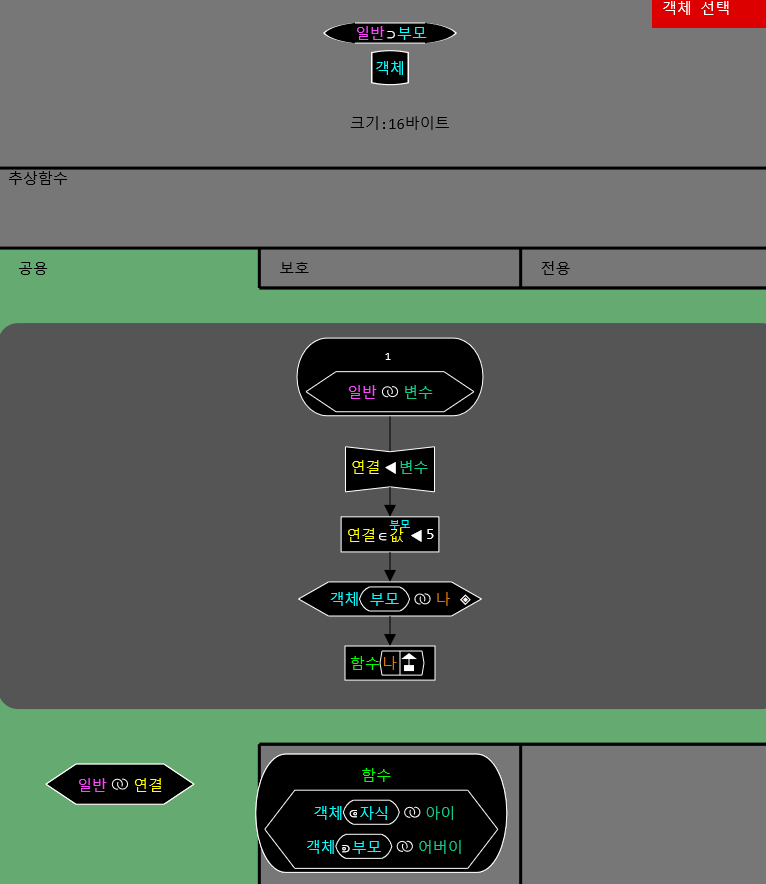
•In the class area, enter Alt G to create a generic.
•Generic can be used as a data type inside the area and must be applied with a reference or allocator.
•When you use a class for which generic is declared, you can put data types in the generic list.
•When you access a generic variable or a function that returns a generic from outside the object, you access the data type in the generic list you created when you created the object.
•In generic, you can specify a parent object by pressing the key. This allows you to create only those parent objects and their child objects in the generic list. You can also access the members of the object that you specify as a parent object when you use generic within the object.
•When creating a generic list press the ; key to make it covariant. The covariant can substitute variables so that the class inherits it. When used, members of the covariant class can be accessed or referenced, but cannot be passed.
•When creating a generic list press the , key to make it contravariant. A contravariant can cause the parent class of the class to come. When used, a reference can be passed to a contravariant class, but members cannot be accessed or referenced.
•If you empty the generic list, you can substitute references regardless of the generic list, but variables or function that use blank generic can only be used to receive reference existence or substitute null.